
Tangential Flow Filtration (TFF) Discover how Tangential Flow Filtration is used for concentration, diafiltration, buffer exchange and purification in pharmaceutical and biotechnology processes.How does it work and what is it used for?
Tangential Flow Filtration (TFF): how does it work and what is it used for?
Within the pharmaceutical and biotechnology industries, processes are increasingly being developed around valuable and sensitive biomolecules. Concentrating and purifying these process streams requires an efficient filtration method without forcing the entire product stream through the filter medium.
Tangential Flow Filtration (TFF), also known as crossflow filtration, is a widely used membrane filtration technique for these applications. TFF is used for concentration, diafiltration, buffer exchange and various separation and purification steps within bioprocessing.
But how exactly does TFF work? And when is this filtration technique used?
What is Tangential Flow Filtration?
In conventional dead-end filtration, the process fluid flows perpendicular to the filter surface. Particles and components retained by the membrane therefore accumulate on the filter surface.
Tangential Flow Filtration works differently.
The process stream flows parallel to the membrane surface. Part of the fluid and smaller components pass through the membrane as permeate, while components that cannot pass through the membrane remain in the retentate stream.
The continuous flow along the membrane helps limit the accumulation of material on the membrane surface. This makes TFF particularly suitable for processes involving larger volumes or applications where the target product needs to be concentrated.
During my job as Operations Manager, I have used Van Borselen for the purchase and cleaning of our filters. I'm extremely happy with their service, quick response time, and customer orientation - would recommend! — Jaap
What is TFF used for?
An important advantage of TFF is that the same technology can be used for different process applications.
- Concentration
When the membrane retains the target product while water and smaller components are able to pass through, the concentration of the product in the retentate increases. - Diafiltration and buffer exchange
TFF can be used to remove small dissolved components from a process stream while simultaneously changing the buffer composition. Fresh buffer is added while permeate is removed through the membrane. - Purification and separation
Depending on the membrane properties, TFF can be used to separate components based on their size. - Clarification
Microfiltration TFF can also be used to remove larger particles and cellular material from process streams, for example after fermentation or cell culture.
TFF in pharmaceutical and biotechnology processes
Tangential Flow Filtration can be used at various stages within bioprocessing.
Examples include the processing of proteins, biomolecules, fermentation products and other biological process streams. Depending on the desired separation objective, the technology can be applied in both upstream and downstream processes.
One interesting application is the production of vaccines and vaccine adjuvants.
In the production of certain adjuvants, intermediates may need to be concentrated or unwanted ions and other small components may need to be removed. TFF enables these process steps to be performed through concentration and diafiltration.
For other types of adjuvants, such as saponin- or cytokine-based systems, ultrafiltration can be used to achieve the desired concentration while simultaneously performing a buffer exchange.
TFF is therefore not limited to one specific filtration step, but is a versatile technology that can be used for different purposes throughout a production process.
Microfiltration and ultrafiltration with TFF
Which components are able to pass through the membrane is largely determined by the type of membrane used.
In microfiltration (MF), membrane pore sizes are typically expressed in micrometres. These membranes can, for example, be used in clarification processes where larger particles need to be removed.
In ultrafiltration (UF), a Molecular Weight Cut-Off (MWCO) is commonly used. This indicates the molecular size range for which the membrane provides a certain level of retention. Ultrafiltration is used, among other applications, to concentrate proteins and other biomolecules.
The required pore size or MWCO therefore strongly depends on the product and the objective of the process step.
Different membrane materials for TFF
In addition to pore size or MWCO, the membrane material also plays an important role.
Our range of TFF cassettes is available with various membrane materials, including:
- PES (polyethersulfone)
- Hydrophilic PVDF (polyvinylidene fluoride)
- RC (regenerated cellulose)
These membrane materials have different properties in terms of hydrophilicity, chemical compatibility and interaction with the product being filtered.
This allows TFF to be used for a wide range of processes, from clarification to the concentration and diafiltration of biomolecules.
TFF cassettes for different process scales
A TFF process developed during research and development often needs to be scaled up to larger production volumes.
TFF cassettes are therefore available in different filtration areas and configurations, allowing the same filtration technology to be used throughout different stages of process development and production.
In addition to the membrane itself, factors such as flow channel, process pressure, temperature, pH, viscosity and process stream composition also play an important role.
TFF cassettes from Van Borselen Filters
Van Borselen Filters offers TFF solutions for applications within the pharmaceutical and biotechnology industries.
Our range includes various TFF cassettes for microfiltration and ultrafiltration, with membrane materials including PES, hydrophilic PVDF and regenerated cellulose.
Depending on the application, these cassettes can be used for processes such as:
- concentration
- diafiltration
- buffer exchange
- clarification
- separation
- purification
In addition to TFF cassettes, compatible cassette holders are available for different filtration areas and process scales.
Do you have an application that uses Tangential Flow Filtration? Our filtration specialists are happy to help you evaluate the technical requirements of your process.
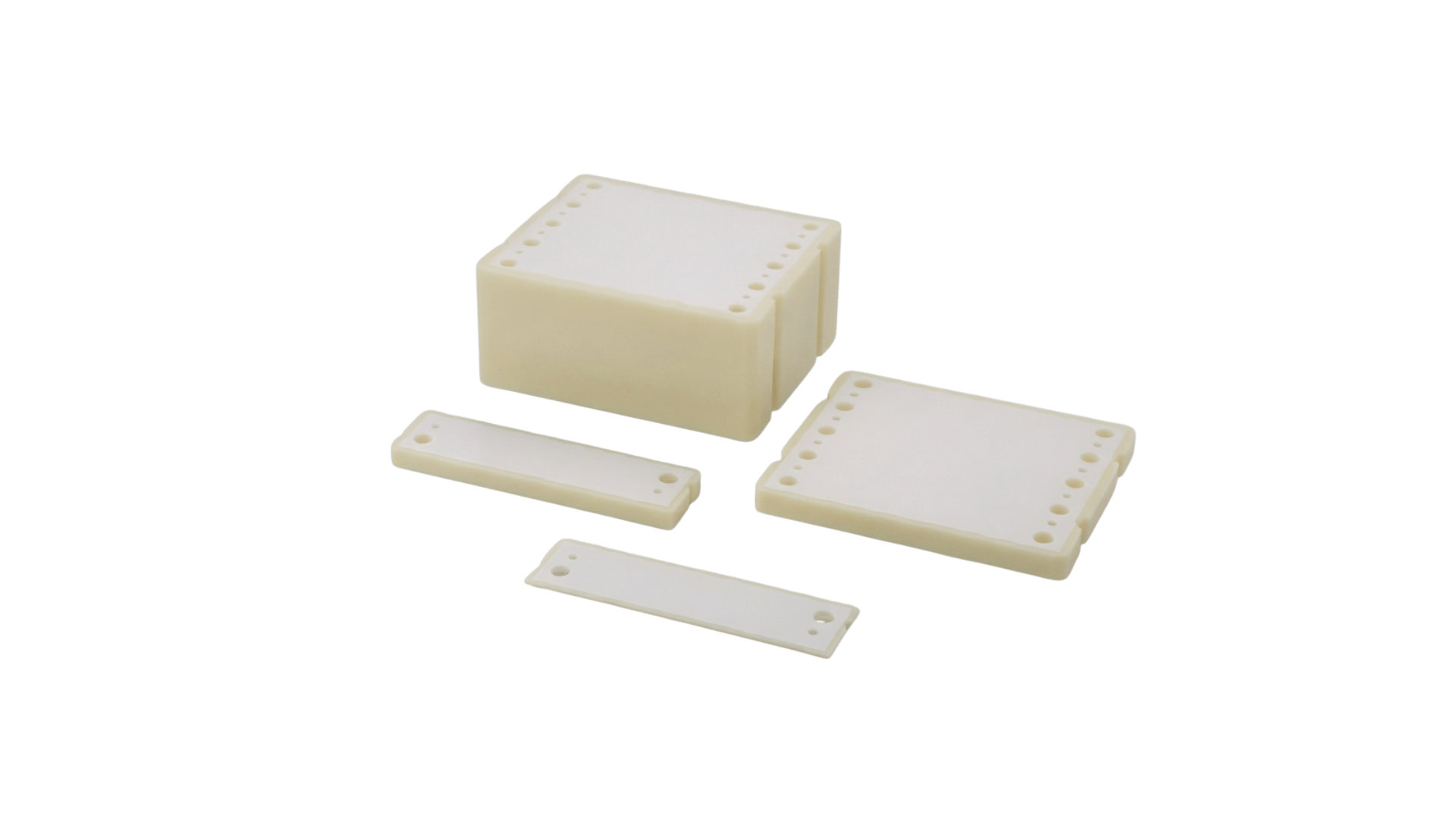
Adapter plates for existing TFF holders
Do you already have a TFF holder in use but want to use our TFF cassettes? In that case, replacing your existing holder is not always necessary.
We also supply adapter plates for holders from other manufacturers. These adapter plates help ensure that our TFF cassettes fit correctly into your existing holder. A proper fit is important to help prevent leakage and pressure loss during the filtration process.
This allows you to integrate our TFF cassettes into your existing setup without having to invest in a new holder.
Would you like to know whether our TFF cassettes and adapter plates are compatible with your current TFF holder? Feel free to contact us. Our filtration specialists will be happy to discuss your application.
Tangential Flow Filtration (TFF) is a membrane filtration technique in which the process fluid flows parallel to the membrane surface. TFF is used in the pharmaceutical and biotechnology industries for applications including concentration, diafiltration, buffer exchange, clarification and purification.
In dead-end filtration, the fluid flows perpendicular to the filter surface. In TFF, the process fluid flows parallel to the membrane surface. This tangential flow helps limit the accumulation of material on the membrane and makes TFF suitable for processing and concentrating a variety of process streams.
In TFF microfiltration, membranes with pore sizes expressed in micrometres are used, for example for clarification. In ultrafiltration, a Molecular Weight Cut-Off (MWCO) is commonly used, and TFF can be applied for applications such as the concentration and diafiltration of proteins and other biomolecules.
Meer weten? Heeft u vragen of wilt u meer informatie? Vul hieronder uw gegevens in, en ons team neemt snel contact met u op. Wij helpen u graag verder!
Kom in contact
Tangential Flow Filtration (TFF) is a membrane filtration technique used in the pharmaceutical and biotechnology industries for concentration, diafiltration, buffer exchange and purification. Discover how TFF works, which membrane materials are used and which bioprocessing applications TFF cassettes are suitable for.