
Infographic | Cultivated meat Discover how cultivated meat is produced in six clear steps and the role of filtration and separation in culture media, cell retention and perfusion. Including applications of TFF and hollow fiber systems.Cultivated meat: what role does filtration play in production?
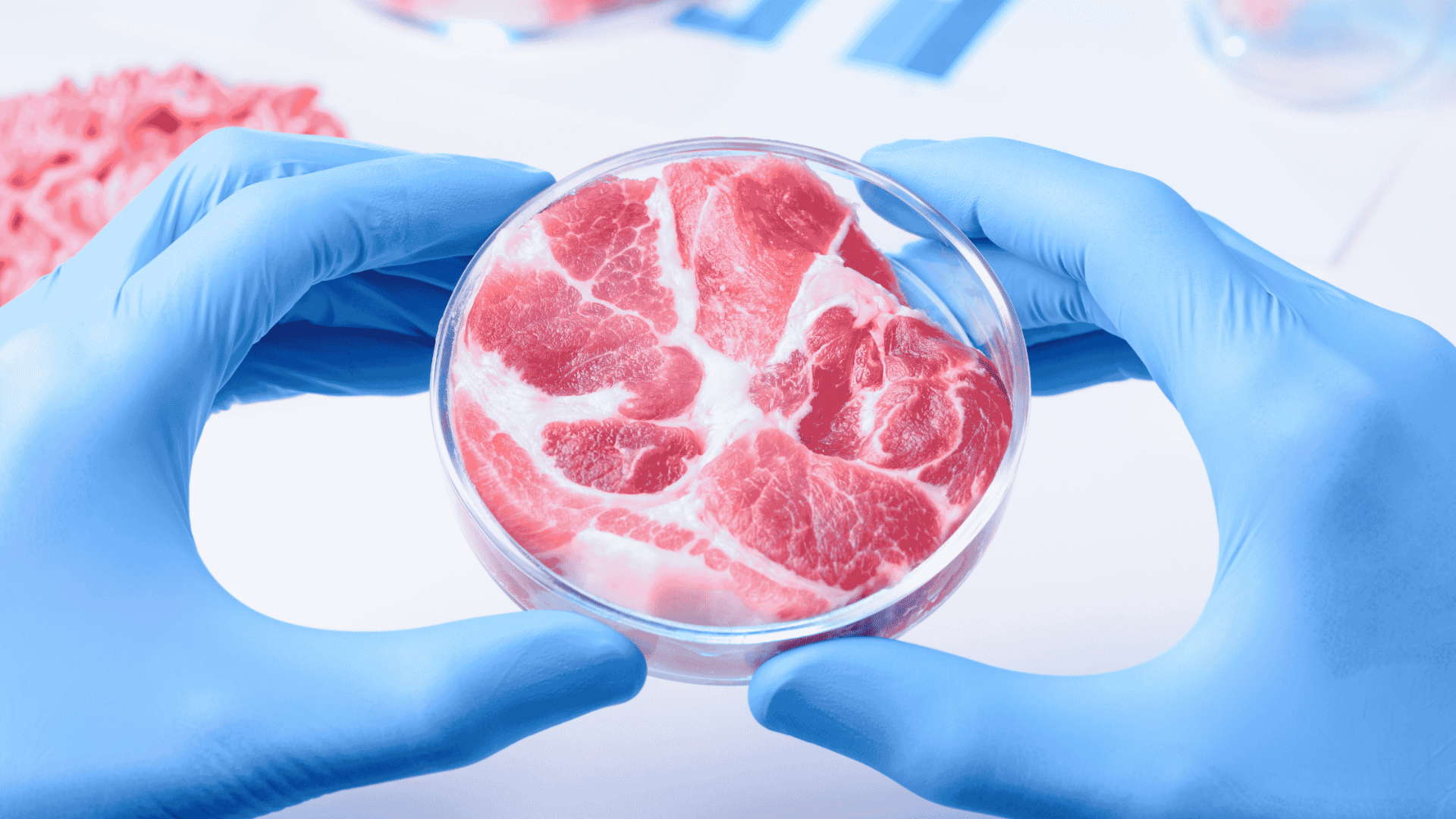
Cultivated meat: what role does filtration play in the future of food production?
Cultivated meat is gaining renewed attention. New initiatives in the Netherlands show that the technology continues to develop. While cultivated meat was primarily a promising experiment just a few years ago, researchers and companies are now working towards the next step: production on a larger scale.
But how is cultivated meat actually produced? And what role do filtration and separation play in this process?
What is cultivated meat and how is it produced?
Cultivated meat is meat grown from animal cells, without the need to raise an entire animal.
The production process begins by collecting a small sample of animal cells. These cells are placed in a bioreactor, where they can grow and multiply under controlled conditions.
To support their growth, the cells are supplied with a specially formulated culture medium containing nutrients such as amino acids, sugars, vitamins and minerals. Under the right conditions, the cells can develop into larger quantities of cell material, which is then further processed into a food product.
Although the principle may sound relatively simple, the production process requires precise control of factors such as temperature, oxygen, nutrients and microbiological quality.
From laboratory to large-scale production
One of the biggest challenges in the cultivated meat industry is scaling up production.
In a laboratory, relatively small volumes are typically used. As production expands to larger bioreactors, the requirements for equipment and processes also change.
This includes handling larger liquid volumes, maintaining the required quality of culture media and efficiently separating cells from liquids.
Filtration and separation processes play an important role in meeting these requirements.
Cultivated meat is evolving from a promising innovation into a new form of food production. Filtration and separation play an important role throughout this process, from cell cultivation to large-scale production.
What role does filtration play in cultivated meat production?
Filtration can be applied at various stages of the production process. The most suitable technology depends on the composition of the liquid, the required separation and the process conditions.
1. Filtration of culture media
A suitable culture medium is essential for growing animal cells. This medium contains nutrients required for cell growth and multiplication.
Depending on its composition, membrane filters can be used to remove unwanted particles or microorganisms from liquid components.
A carefully selected filter helps achieve the required quality of the culture medium while minimising the loss of valuable components.
2. Separation of cells and liquids
During and after cell cultivation, it may be necessary to separate cell material from the surrounding culture medium.
This requires a suitable separation technology, taking factors such as cell size and sensitivity into account.
Depending on the application, various techniques can be used, including membrane filtration and other mechanical separation methods.
The aim is to achieve the required separation while minimising the loss or damage of valuable cell material.
3. Tangential Flow Filtration (TFF)
An important filtration technology in biotechnological processes is Tangential Flow Filtration (TFF), also known as crossflow filtration.
In traditional dead-end filtration, the liquid flows directly through the filter medium. With TFF, the liquid flows along the membrane surface instead.
This allows part of the liquid to pass through the membrane, while other components, such as cells, remain in the circulating liquid.
TFF can be used for applications such as:
- Cell concentration: With a suitable TFF configuration, cells can be retained while part of the liquid is removed.
- Continuous cell cultivation (perfusion): By removing spent culture medium and adding fresh medium, cells can continue growing for longer under suitable conditions without stopping the bioreactor.
- Separation and processing of process liquids: For example, to remove or exchange specific components.
Perfusion offers particularly interesting possibilities for cultivated meat production. By retaining cells in the bioreactor while continuously refreshing the culture medium, higher cell densities can be achieved. This can potentially increase the amount of cell material produced in the same bioreactor, contributing to a higher meat yield.
At Van Borselen Filters, we support companies in selecting suitable TFF cassettes and hollow fiber systems. Our specialists consider factors such as cell size, membrane surface area, flow rate and process conditions.
Choosing the right configuration is essential. When working with living cells, factors such as shear forces and potential cell damage must be carefully considered.
The right filtration solution scales with your process
What works well on a laboratory scale is not automatically suitable for larger production volumes.
When scaling up a filtration process, several factors need to be considered, including the required flow rate, membrane surface area, filter selection and process pressure.
It is therefore important to consider the appropriate filtration and separation methods early in the development of a production process.
By taking these factors into account from the start, companies can better prepare their processes for future expansion.
Filtration solutions from Van Borselen Filters
At Van Borselen Filters, we support companies in the food industry and biotechnology sector in selecting and optimising filtration processes.
Our product range includes membrane filters, capsule filters, TFF cassettes and hollow fiber filtration solutions.
From small-scale laboratory applications to larger production processes, our specialists provide guidance on filter selection, sizing and process conditions.
Because an effective filtration solution is not just about the filter itself, but about the performance of the entire process.
Bronnen
- Stam, H. (2026). Nieuwe initiatieven geven kweekvlees weer toekomst. Vleesmagazine, editie 6, pp. 17–18.
Meet our specialists On 4 and 5 November 2026, Van Borselen Filters will be exhibiting at Future Protein Production x Cultivated Meat Symposium (FPP x CMS) at RAI Amsterdam. This event brings together companies and specialists to discuss the latest developments in alternative proteins and cultivated meat. Curious which filtration solutions are suitable for your process? Visit us at the event and speak with our specialists.Discover our filtration solutions at FPP x CMS 2026
Want to learn more about filtration in the food industry and biotechnology?
Filtration plays an important role not only in cultivated meat production, but also in other food and biotechnology processes. From sterile filtration to the separation and concentration of process liquids, every application requires the right filter selection.
Discover how Van Borselen Filters supports companies with high-quality filtration products and specialist expertise.
Explore our filtration solutions for Food & Beverage
Discover our filtration solutions for Pharma & Biotechnology
Cultivated meat is produced by growing animal cells under controlled conditions in a bioreactor. The cells are supplied with a culture medium containing nutrients such as amino acids, sugars, vitamins and minerals. This allows them to multiply into larger quantities of cell material, which is then processed into a food product.
Filtration can be applied at various stages of the production process. Membrane filters can be used to remove unwanted particles or microorganisms from culture media. In addition, filtration and separation methods are used to separate cells from liquids. The most suitable technique depends on the composition of the liquid, the required separation and the process conditions.
Tangential Flow Filtration (TFF), also known as crossflow filtration, is a technique in which liquid flows along a membrane surface. Part of the liquid passes through the membrane, while components such as cells are retained. In cultivated meat production, TFF can be used for cell concentration and perfusion. During perfusion, spent culture medium is removed and fresh medium is added while the cells are retained. This can contribute to higher cell densities and increased production yields.
Want to learn more about this technology? Read our article Tangential Flow Filtration (TFF): how does it work and what is it used for? or explore our range of TFF cassettes and hollow fiber systems.
Filtration products used in cultivated meat production can include membrane filters, capsule filters, TFF cassettes and hollow fiber systems. The most suitable products depend on factors such as cell size, membrane surface area, flow rate, process pressure and sensitivity to shear forces. Van Borselen Filters supports companies in selecting suitable filtration products, from small-scale laboratory applications to larger production processes.
Learn more? If you would like to receive any additional or specific information about our product range, or if you would like one of our account managers to visit you, please do not hesitate to contact us.
Contact us
Filtration in cultivated meat production
Cultivated meat offers new opportunities for food production, but scaling up cell cultivation presents technical challenges. Filtration and separation play an important role in purifying culture media, separating cells from liquids and supporting perfusion processes using Tangential Flow Filtration (TFF). Van Borselen Filters supports companies with suitable membrane filters, TFF cassettes and hollow fiber systems, from laboratory scale to larger production processes.